
 + 86 18721624519
2002 жылдан бастап Huijue сервер сөрелері мен желілік шкафтары
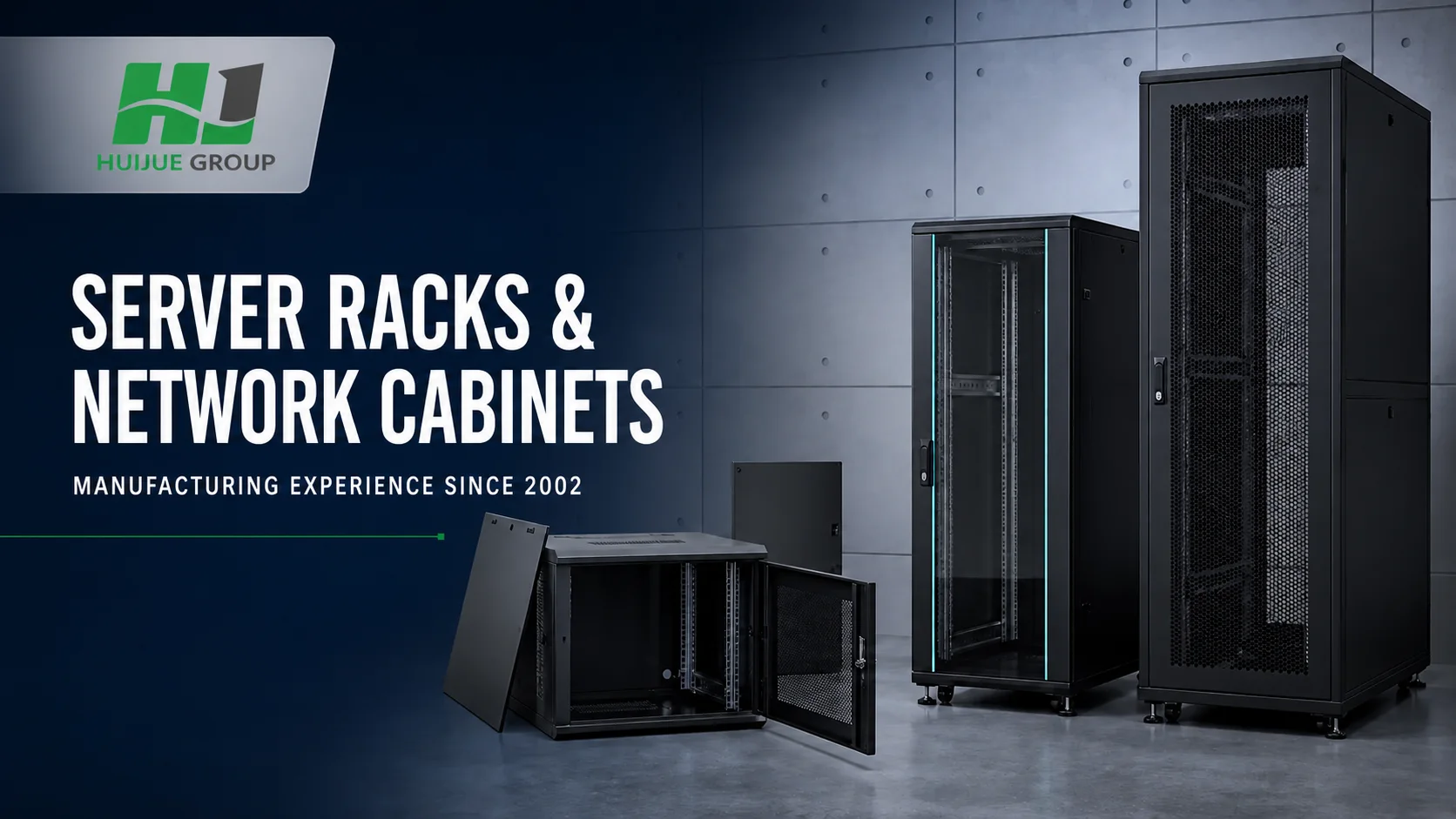
Huijue Group has worked in communications infrastructure and engineered enclosures since 2002. Its current rack portfolio includes HJCB server cabinets, HJCC floor-standing network cabinets, HJWA wall-mount cabinets, HJWB swing-out cabinets, rack PDUs and installation accessories. The products are supplied for B2B, project, distribution and OEM requirements, with the final specification controlled through the selected model, drawing, bill of materials and quotation.
A rack cabinet looks simple until the equipment list arrives. A deep server can collide with the rear door. A high-density patching layout can consume the space needed for cable bends. A wall cabinet can fit the required U height but exceed the permitted wall load. These are not cosmetic details; they determine whether the cabinet can be installed and serviced.
That practical view has shaped Huijue’s server rack and network cabinet business. The job is not merely to make a steel enclosure. It is to turn equipment, site and commercial requirements into a cabinet configuration that production can repeat and a buyer can verify.
Huijue Rack Cabinet Facts at a Glance
- Жұмыс тарихы: Huijue Group was established in Shanghai in 2002.
- Manufacturing foundation: A Fengxian production facility was established in 2005, followed by a Shanghai R&D center in 2006.
- Өндірістік қолдау: The Hai’an operation was added in 2012, expanding the Group’s production and communications-infrastructure capabilities in Jiangsu.
- Current cabinet families: HJCB, HJCC, HJWA and HJWB.
- Supporting products: Rack PDUs, shelves, L-rails, cable management, fan units, blanking panels, grounding and installation hardware.
- Buyer groups: Distributors, importers, system integrators, contractors, OEM buyers and enterprise project teams.
- Тапсырыс үлгісі: Samples and configured small batches through phased and repeat production, subject to quotation and project review.
From Communications Enclosures to Today’s Rack Portfolio
Huijue began operations in Shanghai in 2002. Its early communications-infrastructure and enclosure-engineering work created the foundation for the rack products supplied today. The production base developed further with the Fengxian facility in 2005 and the Shanghai R&D center in 2006. The Hai’an operation followed in 2012.
This development path is relevant to the product. Server racks and network cabinets combine sheet-metal engineering with equipment integration, electrical accessories, airflow planning and installation details. Experience with communications enclosures helped establish a working method in which the cabinet is considered part of a wider infrastructure system rather than a standalone metal box.
Over the years, that method has become more controlled. A standard cabinet platform provides the starting geometry. The equipment list and site conditions determine the required depth, load, door, rail, cable and ventilation choices. Drawings and the bill of materials capture approved changes. Inspection and packing then follow the order record.
One lesson from project work is straightforward: “42U” is not a complete cabinet specification. Two cabinets with the same rack height can serve very different equipment because their width, usable depth, rails, load boundary, doors and airflow arrangements are not the same.
Four Cabinet Families for Different Equipment Duties
HJCB: for servers, storage and mixed IT loads
HJCB is Huijue’s heavy-duty floor-standing rack platform. It is the main starting point for servers, storage systems and mixed IT equipment where chassis depth and total load need careful review. Documented models cover 18U to 47U, 600 mm and 800 mm widths, and depths from 600 mm to 1200 mm. The series has a documented static-load boundary of up to 800 kg, depending on the selected model and approved configuration.
An HJCB selection should still begin with the actual equipment. Slide rails, rear connectors, power cables and service clearance all affect the usable depth. The maximum series rating is not a substitute for checking the quoted model and load distribution.
HJCC: for floor-standing network infrastructure
HJCC is a network-focused cabinet for switches, patch panels, fiber equipment, shelves and compatible indoor devices. Documented configurations cover 18U to 47U with a 600 mm cabinet width and 600 mm or 800 mm depth. Its documented series static-load boundary is up to 500 kg.
The distinction between a “server cabinet” and a “network cabinet” should be treated as a selection guide, not an absolute rule. An equipment list may point to HJCB even in a network project when the installation needs greater depth, width or load capacity.
HJWA: compact wall mounting for shallow equipment
HJWA is a single-section wall-mount cabinet for compatible networking, cabling, security and shallow IT equipment. Documented models cover 6U to 15U with 450 mm or 600 mm depth and a series static-load boundary of up to 50 kg.
Before specifying a wall cabinet, the buyer should verify the wall structure, anchor method, loaded cabinet weight, device depth, cable bend space, ventilation and the clearance needed to open the door and remove panels.
HJWB: rear access where space is restricted
HJWB uses a double-section, swing-out construction. The cabinet body can move away from the wall to give technicians access to rear cabling and connections. This can be useful in network rooms and service areas where there is no working aisle behind the enclosure.
The documented range covers 6U to 15U, uses a 600 × 550 mm cabinet format and has a series static-load boundary of up to 60 kg. The wall, fixing method, cable movement and safe service position must be included in the installation review.
The Cabinet Is Only One Part of the Rack System
A project-ready rack usually needs more than an enclosure. Huijue’s supporting range includes horizontal and vertical rack PDUs, fixed and sliding shelves, cabinet L-rails, cable-management hardware, fan units, blanking panels, grounding bars, cage nuts, screws, plinths and other installation components.
These parts are selected against the cabinet and equipment layout. A shelf requires a confirmed depth and load. A PDU requires the correct socket standard, current, input cable and protection arrangement. Cable management must preserve bend radius and service access without blocking airflow. Fan units should not be treated as a replacement for a room-level cooling plan.
Keeping the cabinet and accessories within one approved configuration reduces ambiguity during purchasing, assembly and site acceptance.
What Huijue Brings to a B2B Rack Project
Selection based on equipment fit
Huijue asks for the information that changes the cabinet choice: equipment type, rack-unit demand, chassis depth, connector space, mounting method, loaded weight, cable route, airflow direction, room access and maintenance method. This is more useful than selecting from a photograph or model name alone.
Customization without losing the baseline
Doors, panels, rails, cable entry, finish, labels, accessories and packing can be reviewed around a documented cabinet platform. Requirements outside the standard boundary move to project review. Once approved, the drawing, BOM and revision record define what production should build.
This matters for repeat business. If a distributor returns six months later for the same configuration, the approved record is a better reference than a chain of emails or an old product photograph.
A connected manufacturing workflow
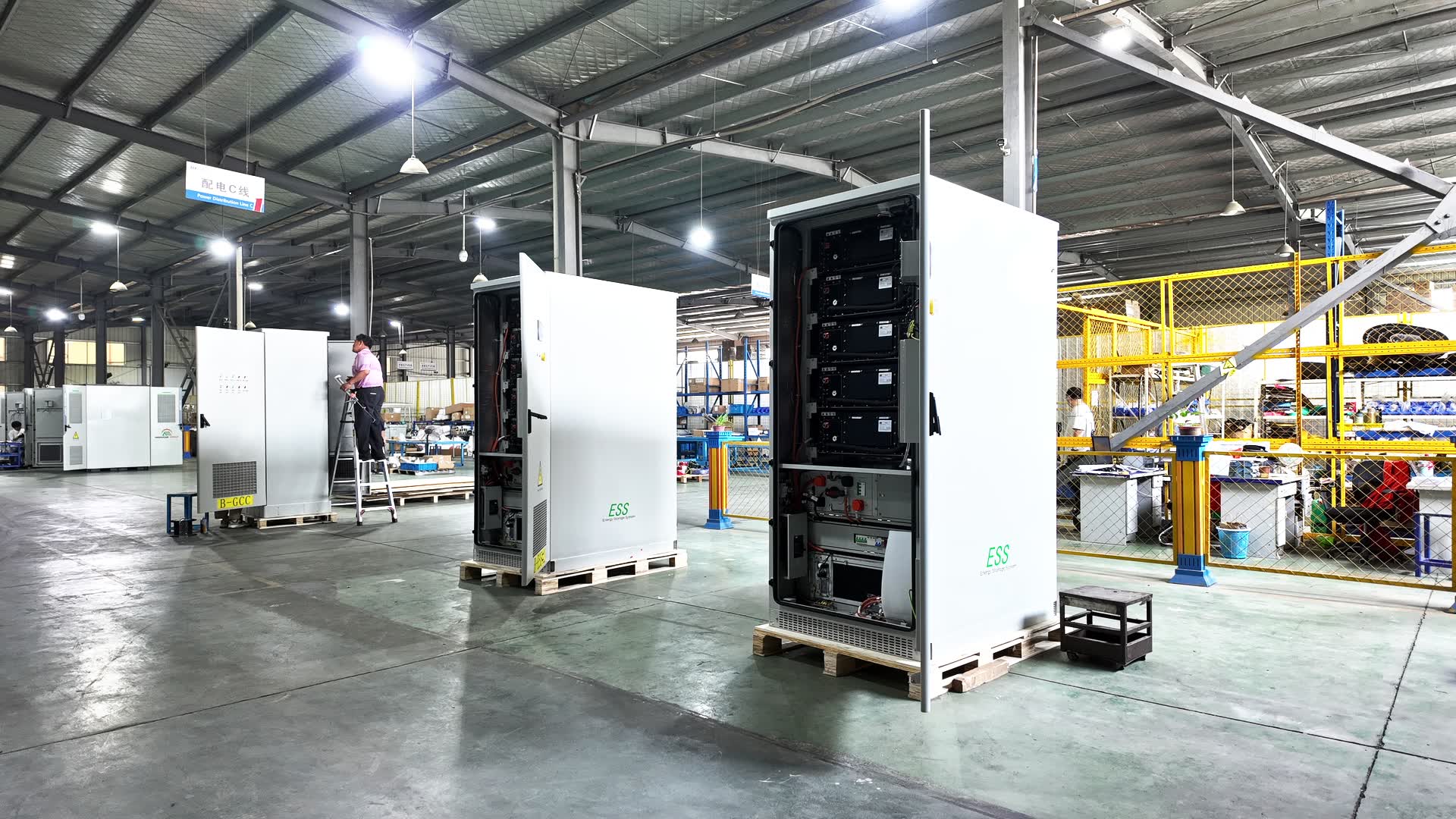
The order process links requirement review with sheet-metal processing, fabrication, surface finishing, assembly, inspection and packing. Factory records and photographs show these working environments. They do not, by themselves, prove a fixed tolerance, daily capacity, defect rate or delivery time; those items remain product- and order-specific.
Inspection tied to the quotation and BOM
Typical release checks cover the selected model, drawing and BOM; cabinet dimensions and verticality; surface condition; welds and burrs; doors, locks and panels; rail positions; accessories; cable entry; grounding or PDU items where applicable; labels; protective materials; and packing count.
Coating, structural and electrical tests are included when required by the product or agreed inspection plan. Certificate scope, customer witness requirements and third-party inspection should be confirmed before production rather than assumed after the order is complete.
A practical path from sample to repeat supply
Many B2B buyers do not want to begin with a container-scale order. A sample or smaller configured batch can establish equipment fit, workmanship, finish, labelling and packing. Once approved, the same SKU, drawing, BOM and revision details provide the basis for phased or repeat production. Minimum quantity and delivery timing still depend on the configuration and quotation.
Selected Historical Project Records
Huijue’s available company records include cabinet supply for cloud-computing, telecom and private-cloud infrastructure. The examples below are stated as recorded supply scopes, not as current endorsements or continuing commercial relationships:
- Tianfu Cloud Computing Center: a 2019 cabinet and equipment-room construction scope covering 500 network cabinets.
- China Telecom core-network ITC room: a recorded scope covering 223 network cabinets and 12 AC distribution cabinets.
- China Unicom supporting renovation: a 12th-floor project scope covering five cold aisles and 90 network cabinets.
- Ningxia private-cloud project: a recorded scope covering 64 network cabinets and eight DC distribution cabinets.
Historical quantities do not define a current product model or guarantee a result for another site. A present-day order must be matched to the current cabinet series, equipment list, drawing, BOM, acceptance plan and commercial documents.
What to Send for an Accurate Rack Cabinet Quotation
Most avoidable quotation delays come from missing inputs. The following information gives the project team a usable starting point:
- Equipment list and intended application
- Required rack height or total U-space demand
- Maximum chassis depth, including rails and rear connectors
- Estimated total equipment load and any concentrated loads
- Floor-standing or wall-mounted installation
- Front, rear and side service-access requirements
- Cable entry, bend-radius and cable-management requirements
- Airflow direction and room cooling conditions
- Rack PDU, plug, current and grounding requirements
- Quantity, destination and required delivery window
- Colour, branding, labels, assembled or flat-pack supply, packing and document requirements
If some information is not yet available, state that clearly. A preliminary selection can be revised; an unstated assumption is harder to detect.
Buyers can review the Huijue server rack and network cabinet range, қараңыз rack cabinet manufacturing workflow және тексеріңіз order-specific inspection approach. For model selection and a commercial proposal, send the equipment list, quantity and destination through the rack cabinet quotation form.
Жиі Қойылатын Сұрақтар
Is Huijue Group a server rack and network cabinet manufacturer?
Yes. Huijue Group was established in Shanghai in 2002 and developed from communications-infrastructure and enclosure engineering. Its current rack range includes floor-standing server cabinets, floor-standing and wall-mount network cabinets, rack PDUs and installation accessories.
What is the difference between HJCB and HJCC?
HJCB is the main starting platform for deeper or heavier servers, storage and mixed IT equipment. HJCC is a network-focused floor-standing cabinet for switches, patching, fiber and compatible devices. The final choice depends on depth, width, loaded weight, airflow, cable space and service access—not the product label alone.
Can Huijue customize a rack cabinet?
Yes. Doors, panels, rails, cable entry, finish, labels, accessories and packing can be reviewed around a standard platform. The final configuration, minimum quantity, drawing requirements, price and lead time are confirmed during project and quotation review.
Can a distributor begin with a sample or small batch?
Yes, subject to the selected configuration and quotation. A sample or smaller project batch can be used to review fit, workmanship, finish and packing before phased or repeat supply. The approved SKU, drawing, BOM and revision record should be retained for subsequent orders.
What information is needed to select a server rack?
At minimum, provide the equipment list, total U-space, maximum device depth, estimated loaded weight, mounting location, cable entry, airflow direction and maintenance clearance. Quantity, destination, PDU, accessories, finish, packing and documentation are also required for an accurate commercial proposal.
Дәлелдер туралы ескертпе: Company dates, product ranges and historical project scopes in this article follow Huijue’s reviewed company, product and project records available in September 2026. Model dimensions, load limits, certificate scope, test requirements, contracting entity, delivery schedule and acceptance criteria must be confirmed in the current quotation and commercial documents.